
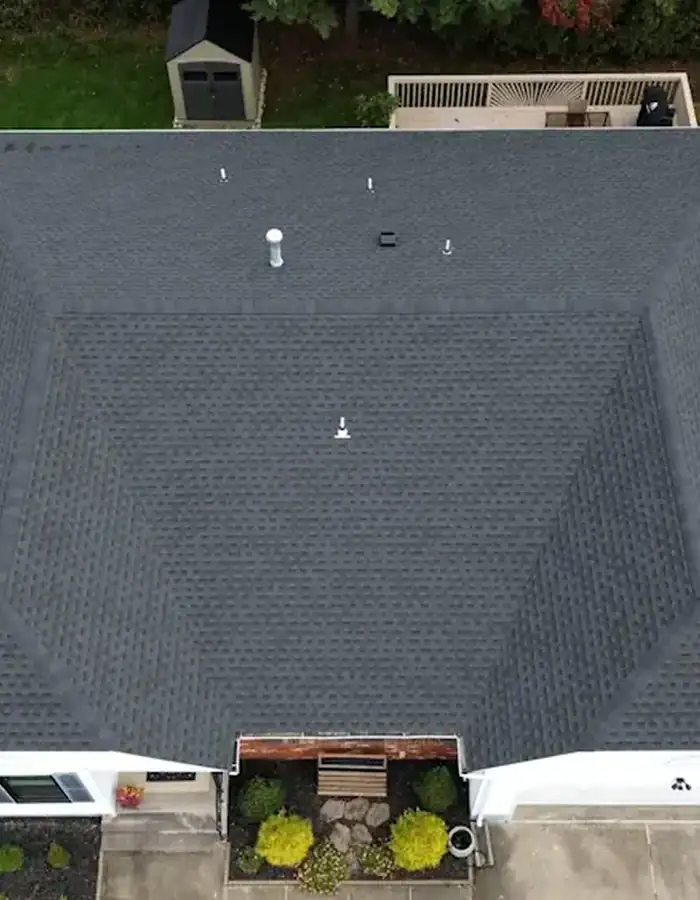
Attic Ventilation Services in New Jersey
Balanced intake and exhaust ventilation that protects your roof and lowers energy costs
Why Attic Ventilation Matters
An attic without proper airflow traps heat and moisture, and both cause real damage over time. In winter, trapped heat escaping from the living space below melts snow on the roof, which refreezes at the cold eaves and forms ice dams that force water back under the shingles. In summer, an under-ventilated attic can climb well past 130°F, radiating heat into the rooms below and shortening the life of shingles from the underside.
Moisture is the other half of the problem. Without exhaust to carry it out, humid air from the house condenses on the cold roof deck, which is exactly the environment mold, mildew and wood rot need to take hold.
Ventilation Types We Install
Ridge Vents
A continuous exhaust vent installed along the roof peak, drawing hot, moist air out along the entire ridge line rather than a single point.
Soffit Vents
Intake vents installed under the eaves that pull cooler outside air into the attic, completing the intake-and-exhaust cycle a ridge vent needs to work.
Gable Vents
Vents mounted in the gable ends of the attic, useful on roofs where a full ridge vent is not practical.
Attic Fans
Powered exhaust fans that actively pull hot air out, useful for attics that need more airflow than passive venting alone provides.
Turbine Vents
Wind-driven vents that spin to pull air out of the attic without electricity, a good passive option on breezier sites.
A Balanced System Is What Actually Works
Intake and exhaust have to work together, not separately
Intake at the Eaves
Soffit vents pull cool outside air in at the lowest point of the attic
Exhaust at the Ridge
Ridge vents or fans let hot, moist air escape at the highest point
Roughly Equal Balance
Intake and exhaust need to be close to balanced, or the system underperforms
Signs Your Attic Ventilation Needs Attention
- Ice dams forming along the eaves in winter, even after a moderate snowfall
- A musty or mildew smell when you open the attic access
- Visible frost or condensation on the underside of the roof deck in cold weather
- Upper floors that stay noticeably hotter than the rest of the house in summer
- Shingles curling or aging faster than expected from underneath, not just weather exposure
- Higher-than-expected cooling bills in summer
Ice dams specifically are one of the clearest signals: see our guide on roof and attic insulation for how ventilation and insulation work together to prevent them.
Attic Ventilation Questions New Jersey Homeowners Ask
How much attic ventilation do I actually need?
The common building-code guideline is 1 square foot of net free ventilation area for every 300 square feet of attic floor space, split roughly evenly between intake (soffit) and exhaust (ridge). We calculate the exact requirement for your attic during the estimate rather than guessing.
Can I add a ridge vent without soffit vents?
You can, but it defeats much of the purpose. Ridge vents need soffit intake to create proper airflow; without it, a ridge vent can end up pulling conditioned air from inside the house instead of fresh air from outside, or barely moving air at all.
Does better attic ventilation really help prevent ice dams?
Yes, it is one of the most effective preventive measures. Ice dams form when heat escaping into the attic melts snow on the roof, which then refreezes at the colder eaves. A properly ventilated attic stays closer to outdoor temperature, which significantly reduces that melt-refreeze cycle.
Will improving attic ventilation lower my air conditioning bills?
Often, yes. An under-ventilated attic can reach well over 130-150°F in summer, and that heat radiates into the living space below, forcing your AC to work harder. Proper ventilation, combined with adequate attic insulation, reduces that heat load.
Do you install ventilation as its own project, or only with a new roof?
Both. Ventilation upgrades are often bundled with a roof replacement since the roof deck is already open, but we also install or correct ventilation on its own for homeowners dealing with ice dams, attic moisture or high cooling bills on an otherwise sound roof.
Ready to Fix Your Attic Ventilation?
Contact us today for a free assessment and a ventilation plan built for your attic.